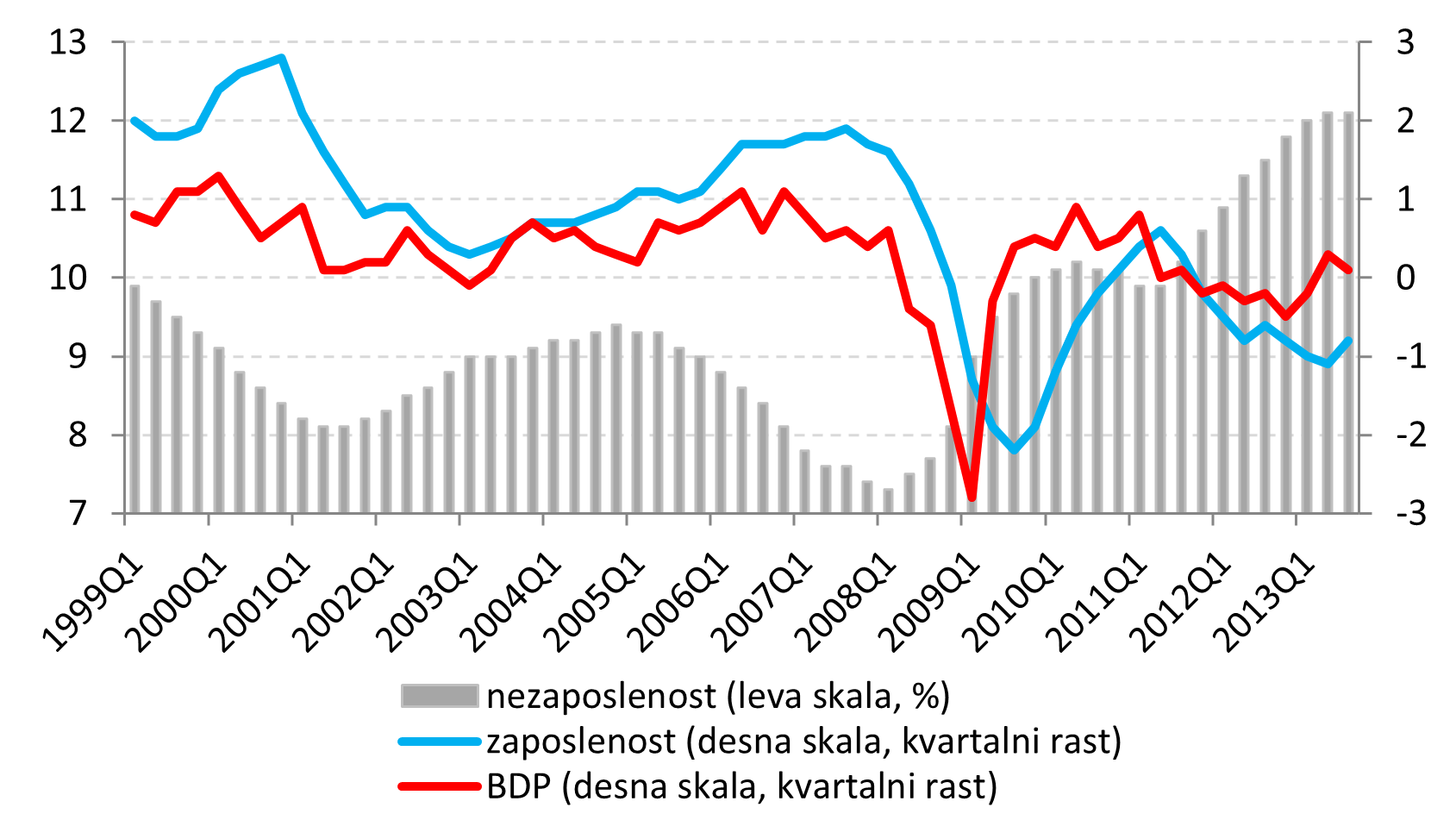
U periodu 2000-2013. godina prosečna godišnja stopa rasta BDP-a u Evrozoni iznosila je 1,2%. Ova stopa rasta je dvostruko niža od stopa privrednog rasta razvijenih ekonomija u posleratnom periodu (2,5%).
Takav privredni rast nije održiv u dugom roku i vidimo da je u velikoj meri uticao na visoku stopu nezaposlenosti tokom celog perioda. U periodu od nastanka EU do danas stopa nezaposlenosti nije padala ispod 7%, dok je u trećem kvartalu 2013. godine dostigla maksimalnih 12,1%.
Dodatan problem ogledao se u „niskoj“ stopi prirodne stope nezaposlenosti (s početka posmatranog perioda bila na nivou od 4,5%, a pred kraj perioda čak 6%). Taj jaz između aktuelne i prirodne stope nezaposlenosti se produbljivao iz godine u godinu, što uz nisko ciljanu inflaciju nije davalo prostora za brži rast i potencijalno veće zapošljavanje. Posledica toga je značajno odstupanje aktuelnog autputa od potencijalnog autputa, tj. veliki autput gep.
Tokom novog milenijuma Evrozona je bila više suočena sa usporavanjem privrednog rasta – potencijalnog autputa, koji naviše „gura“ aktuelni rast privrede. Otuda i postoji problem sa rastućom stopom nezaposlenosti. Taj problem će se nastaviti jer su brojne zemlje Evrozone sučene sa smanjivanjem potencijalnog autputa, poput Italije, Irske, Španije i Grčke.
Izvor: EUROSTAT
In the period 2000–2013, the average annual GDP growth rate in the Eurozone amounted to 1.2%. This growth rate is twice as low as the economic growth rates recorded by developed economies in the post-war period (2.5%).
Such growth is not sustainable in the long run and has largely contributed to the high unemployment rate throughout the entire period. From the establishment of the EU to the present, the unemployment rate has not fallen below 7%, while in the third quarter of 2013 it reached a peak of 12.1%.
An additional problem was reflected in the relatively low natural rate of unemployment (around 4.5% at the beginning of the observed period and as much as 6% toward the end). The gap between the actual and the natural rate of unemployment widened year after year which, together with low targeted inflation, left little room for faster growth and potentially higher employment. As a result, there was a significant deviation of actual output from potential output, i.e. a large output gap.
During the new millennium, the Eurozone was increasingly faced with a slowdown in economic growth – particularly in potential output, which normally drives actual economic growth. This explains the problem of the rising unemployment rate. The problem is likely to persist, as many Eurozone countries are facing a decline in potential output, such as Italy, Ireland, Spain, and Greece.
Source: EUROSTAT