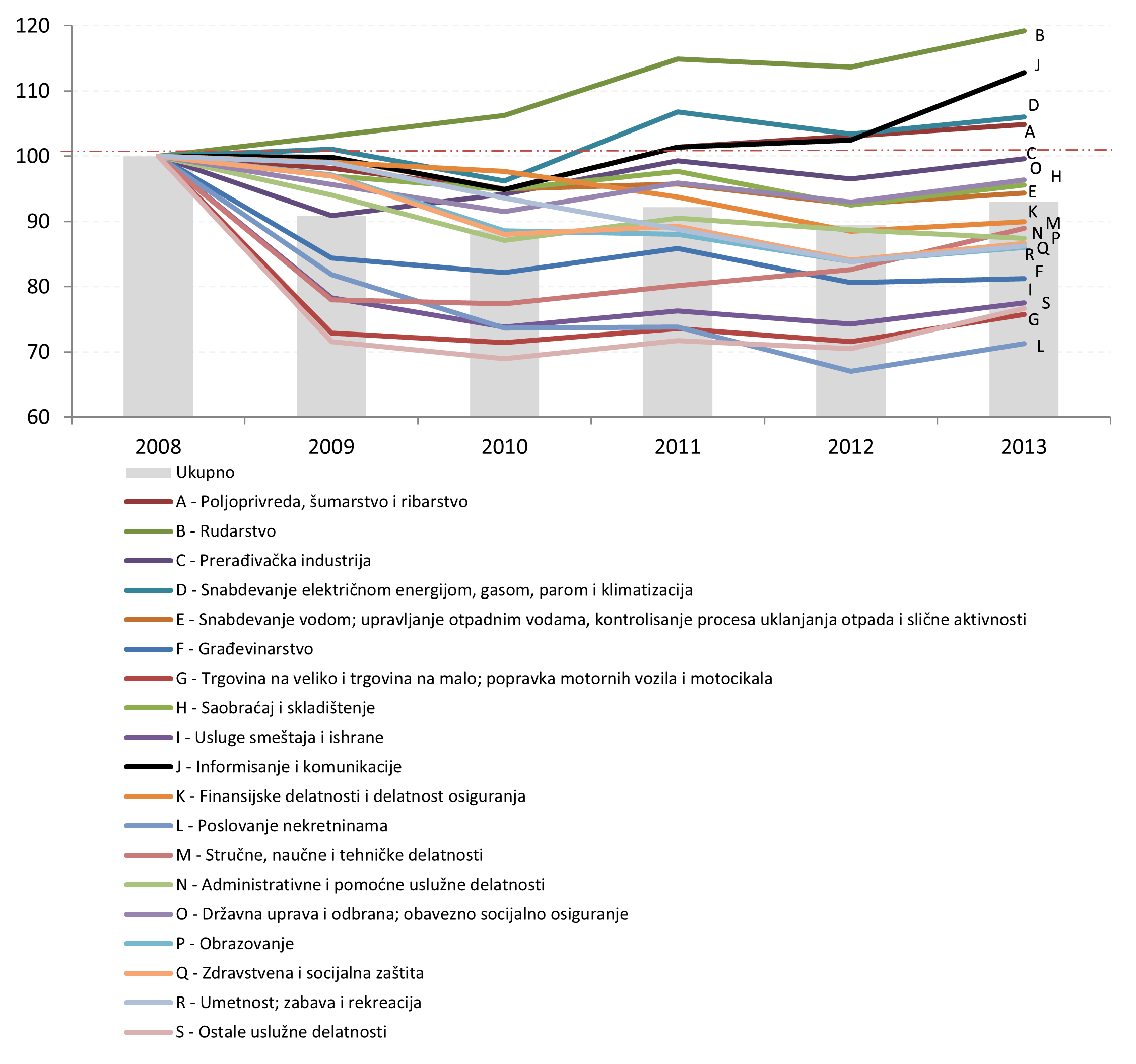
Prosečna realna neto zarada u Srbiji još uvek je ispod pre-kriznog nivoa. Dalje smanjivanje zarada, kao ideja Vlade, ne samo da bi uticalo na pad agregatne tražnje već bi se dodatno smanjilo životni standard građana, koji je ionako niži nego 2007. godine.
Prosečne realne neto zarade u Srbiji su već 5 godina ispod pre-kriznog nivoa. Samo u 2013. godini realne neto zarade su niže za 7 indeksnih poena.
Analiza sektora privrede pokazuje da su jedino u sektorima B-Rudarstvo, J-Informisanje i komunikacije, D-Snabdevanje električnom energijom, gasom, parom i klimatizacija i A-Poljoprivreda, šumarstvo i ribarstvo prosečne realne neto zarade iznad pre-kriznog nivoa (119,2; 112,8; 106,0 i 104,9; respektivno).
U najnepovoljnijoj poziciji su radnici iz sektora L-Poslovanje nekretninama, G-Trgovina na veliko i trgovina na malo, popravka motornih vozila i motocikala, S-Ostale uslužne delatnosti i I-Usluge smeštaja i ishrane, gde su indeksi realnih neto zarada niži više od 20 indeksnih poena (71,3; 75,8; 76,6 i 77,5; respektivno) Očigledno je da su sektori koji su trebali biti nosioci tranzcijie i najveći primaoci investicija podbacili u periodu krize, kao na primer sektor K-Finansijske delatnosti i delatnosti osiguranja (indeks zarada 90, indeks zaposlenosti 103). Istovremeno, najveći rast zaposleniosti zabeležen je u sektoru L-Poslovanje nekretninama za čak 35% tokom krizniih godina (najviše u 2010. godini).
Reforme tržišta rada koje su sprovodile deficitarne zemlje Evrozone jesu važne po stavovima MMF-a, ali ne nužno kroz smanjenje plata jer odustajenjem od smanjivanja plata može da se ubrza prilagođavanje na tržištu rada i doprinese smanjenju nezaposlenosti, a smanjenje zarada uticaće na potrošnju i vraćanje unutrašnje ravnoteže.
The average real net wage in Serbia is still below its pre-crisis level. Further wage reductions, as proposed by the Government, would not only lead to a decline in aggregate demand but would also further reduce the living standard of citizens, which is already lower than in 2007.
Average real net wages in Serbia have remained below their pre-crisis level for five consecutive years. In 2013 alone, real net wages were lower by 7 index points.
An analysis by economic sector shows that only in sectors B – Mining and quarrying, J – Information and communication, D – Electricity, gas, steam and air conditioning supply, and A – Agriculture, forestry and fishing are average real net wages above their pre-crisis levels (119.2, 112.8, 106.0 and 104.9, respectively).
The most unfavorable position is observed among workers in sectors L – Real estate activities, G – Wholesale and retail trade; repair of motor vehicles and motorcycles, S – Other service activities, and I – Accommodation and food service activities, where real net wage indices are more than 20 index points below the pre-crisis level (71.3, 75.8, 76.6 and 77.5, respectively).
It is evident that sectors expected to be the main drivers of transition and major recipients of investment underperformed during the crisis, such as sector K – Financial and insurance activities (wage index 90, employment index 103). At the same time, the highest growth in employment was recorded in sector L – Real estate activities, with an increase of as much as 35% during the crisis years (especially in 2010).
Labor market reforms implemented in deficit countries of the Eurozone are considered important according to IMF views, but not necessarily through wage cuts. Abandoning wage reductions can accelerate labor market adjustment and contribute to lower unemployment, whereas wage reductions negatively affect consumption and the restoration of internal economic balance.