Indeksi konkurentnosti Svetskog ekonomskog foruma za 2014. godinu pokazuju napredak sprske ekonomije sa aspekta konkurenosti, ali zabrinjava i dalje nizak nivo indeksa (3,9 od 7), rejting zemlje (94 od 144) i činjenica da smo na začelju zemalja sa evropskog kontinenta (jedino Albanija lošije rangirana).
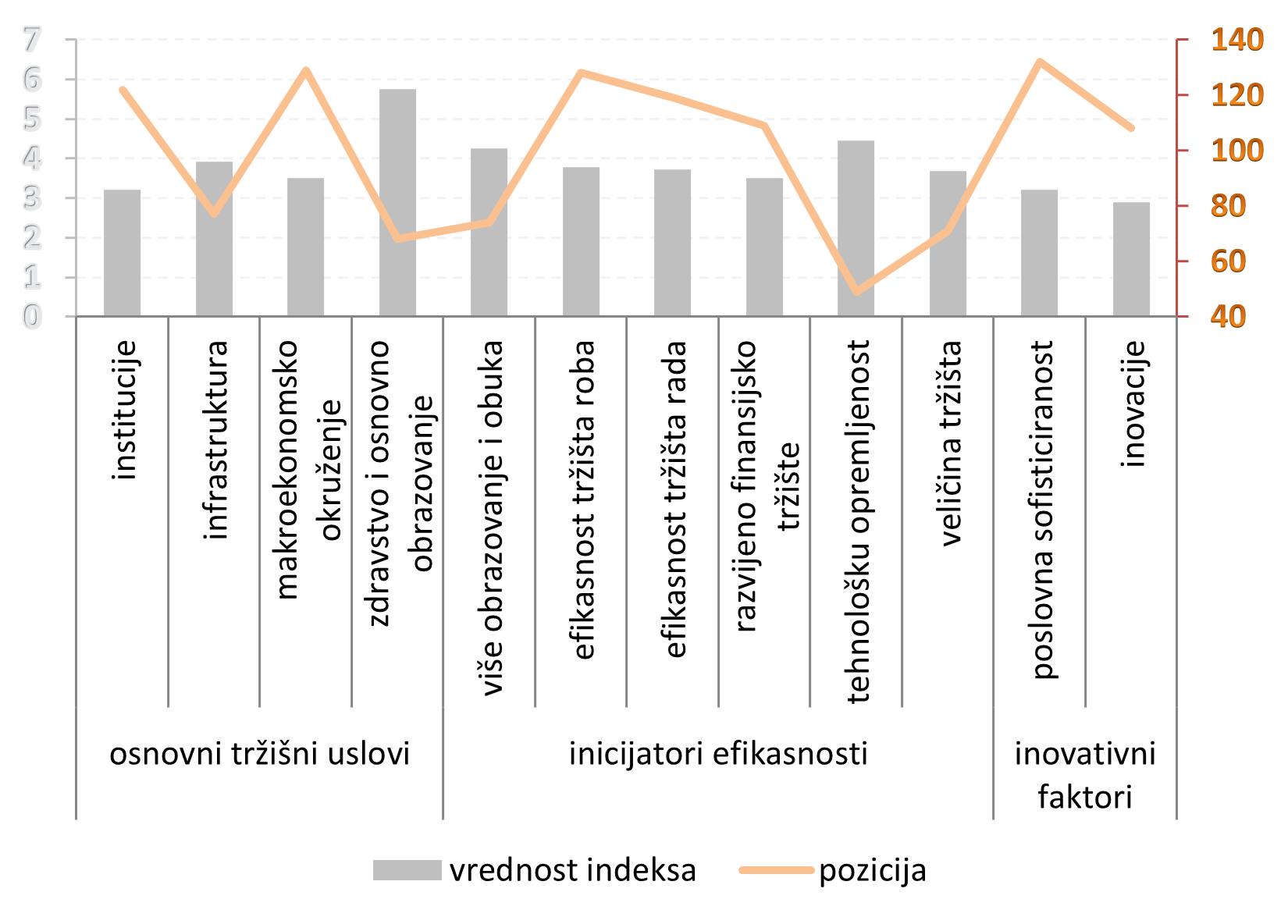
Svake godine Svetski ekonomski forum (ekonomski samit u Davosu) rangira zemlje prema Indeksu globalne konkurentnsoti (GCI) koga čine tri pod indeksa: (1) osnovni tržišni uslovi (vrednost indeksa 4,10 pozicija 101), (2) inicijatori efikasnosti (vrednost indeksa 3,90 pozicija 80) i (3) inovativni faktori (vrednost indeksa 3,05 pozicija 121). U osnovi GCI je zasnovan na 12 stubova, i to: institucije, infrastrukturu, makroekonomsko okruženje, zdravstvo i osnovno obrazovanje, više obrazovanje i obuku, efikasnost tržišta roba i tržišta rada, razvijeno finansijsko tržište, tehnološku opremljenost, veličinu tržišta, poslovnu sofisticiranost i inovacije. Srbija najbolje rezultate pokazuje u oblasti zdravstva i osnovnog obrazovanja, tehnološke opremeljenosti i visokog obrazovanja i obuke, dok veoma loše rezultate beleži na polju inovacija i institucija, gledano po vrednosti indeksa i poziciji na listi zemalja.
U poređenju sa prvim izveštajem SEF koji je obuhvatio i Srbiju (2004. godine), realno posmatrano situacija sa aspekta konkurentnosti nije se značajnije promenila. Tada smo bili rangirani na 96 mestu od 104 zemlje, a indeks je imao vrednost 3,16. Najveći zabeleženi napredak je ostvaren već 2005. godine kada je vrednost indeksa bila 3,67 i od tada je ostvaren mali napredak u konkurentnosti ekonomije.
Već niz godina Srbija je na začelju Evrope po konkurentnosti i u grupi je zemalja sa afričkog kontinenta.
Pogrešno je govoriti o nivou konknurenotnosti privrede na osnovu ranga indeksa konkurentnosti. Ključna je vrednost indeksa. Pozicija zemlje na rang listi zavisi ne samo od ostvarenog rezultata zemlje već i ostalih zemalja koje su obuhvaćene listom. Tako je Srbija najbolje rangirana kod tehnološke opremeljenosti (na 49 poziciji) ali je vrednost indeksa najviša kod zdravstva i osnovnog obrazovanja čak 5,76 (od 7) a po rangu je na 68 poziciji.
The World Economic Forum’s competitiveness indices for 2014 indicate some progress of the Serbian economy in terms of competitiveness; however, the persistently low index value (3.9 out of 7), the country’s ranking (94th out of 144), and the fact that Serbia is positioned at the bottom among European countries (with only Albania ranked lower) remain a cause for concern.
Each year, the World Economic Forum (the Davos Economic Summit) ranks countries according to the Global Competitiveness Index (GCI), which consists of three sub-indices: (1) basic requirements (index value 4.10, rank 101), (2) efficiency enhancers (index value 3.90, rank 80), and (3) innovation and sophistication factors (index value 3.05, rank 121). The GCI is fundamentally based on 12 pillars: institutions, infrastructure, macroeconomic environment, health and primary education, higher education and training, goods market efficiency, labor market efficiency, financial market development, technological readiness, market size, business sophistication, and innovation. Serbia achieves its best results in the areas of health and primary education, technological readiness, and higher education and training, while it records very poor performance in innovation and institutions, both in terms of index values and country rankings.
Compared with the first World Economic Forum report that included Serbia (2004), the situation from a competitiveness perspective has not changed significantly in real terms. At that time, Serbia was ranked 96th out of 104 countries, with an index value of 3.16. The most notable improvement was recorded as early as 2005, when the index value reached 3.67; since then, only marginal progress in economic competitiveness has been achieved.
For many years, Serbia has remained at the bottom of Europe in terms of competitiveness and has been grouped with countries from the African continent. It is misleading to assess the level of economic competitiveness solely on the basis of a country’s rank in the Global Competitiveness Index. The index value itself is crucial. A country’s position on the ranking list depends not only on its own performance but also on the performance of other countries included in the ranking. Thus, Serbia is best ranked in technological readiness (49th position), while the highest index value is recorded in health and primary education – 5.76 out of 7 – yet Serbia ranks only 68th in this pillar.