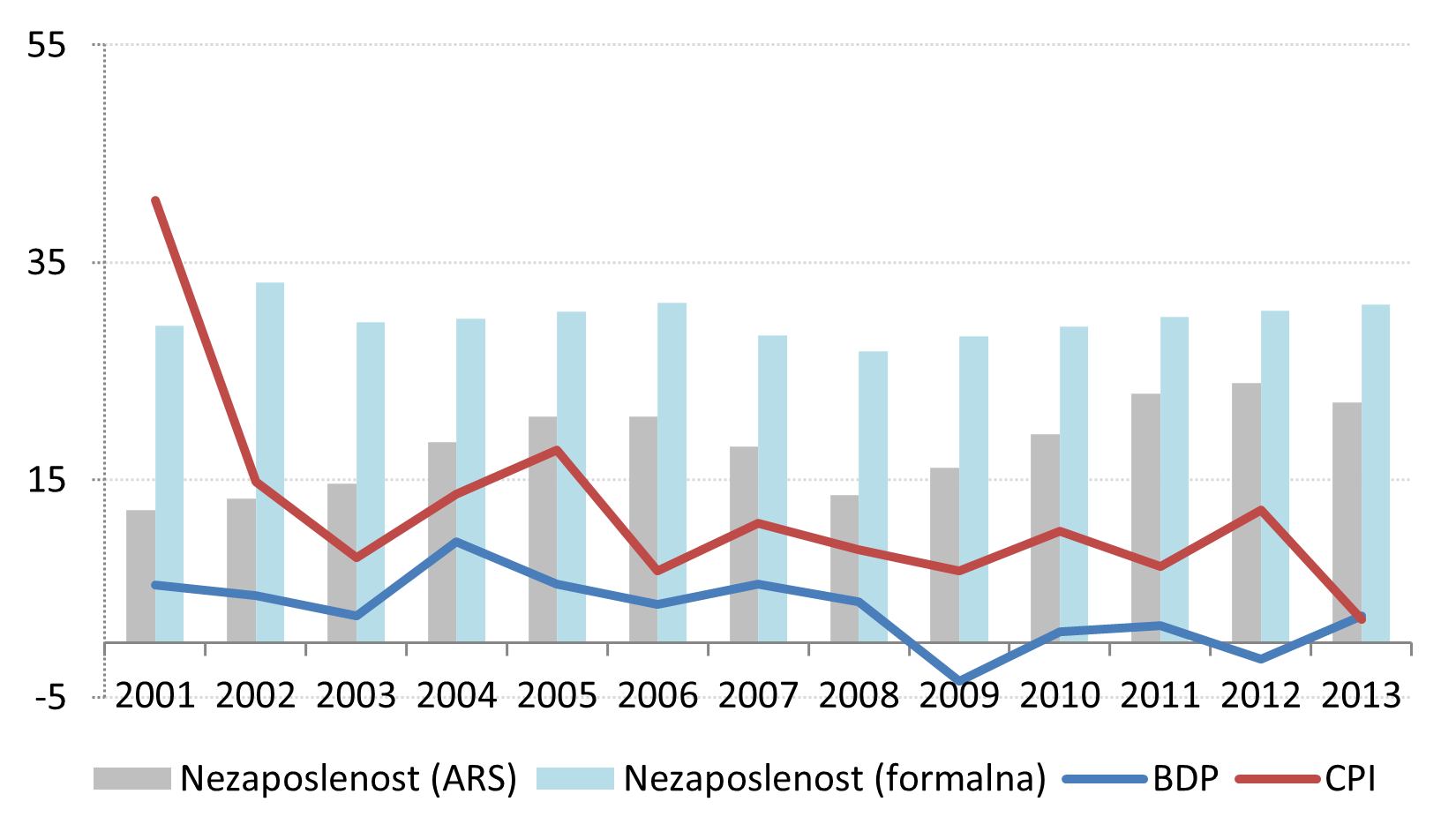
Kolektivno nasleđe dovelo je srpsku ekonomiju do problema strukturne nezaposlenosti. Niska privredna aktivnost je uzročnik dugogodišnje visoke nezaposlenosti, što je bilo posebno izraženo tokom krize. Recesioni efekti, obično praćeni niskom inflacijom (a u poodmakloj fazi krize i sa deflacijom), uzrokuju pad potencijalnog autputa i sve veći gep aktuelne nezaposlenosti od prirodne stope nezaposlenosti.
Nedovoljna mobilnost kapitala i neaktivna politika institucija tržišta rada samo su dodatno pogoršavale pozicije radne snage i uticali na pojavu strukturne nezaposlenosti. Takva nezaposlenost ne može se smanjiti primenom konvencijalnih politika – monetarne i fiskalne politike, već specijalnim politikama (politika dohotka i institucionalne politike). Zato danas, adekvatna podsticajna poreska politika i aktivna politika zapošljavanja moraju biti glavno sredstvo u rukama kreatora ekonomske politike ako se želi niska stopa nezaposlenosti. Danas takav problem postoji i u Evropskoj uniji.
Na početku procesa tranzicije ključan cilj ekonomske politike bio je usporavanje inflacije. Međutim, pri niskoj inflaciji najviše je trpeo privatni izvozni sektor u uslovima nedovoljnje sopstvene akumulacije i nepovoljnih kreditnih linija na tržištu (izuzev kod političkih kombinacija). Usporavanjem ovog sektora privrede nije se otvarao prostor da se neefikasan višak zaposlenih iz državnog i javnog sektora prebaci u privatan sektor. To je usporavalo privredni rast i dalje uticalo na povećanje broja nezaposlenih u privredi.
The collective legacy has brought the Serbian economy into a problem of structural unemployment. Low economic activity has been the root cause of persistently high unemployment over many years, which became particularly pronounced during the crisis. Recessionary effects, typically accompanied by low inflation (and, in the later stages of the crisis, deflation), lead to a decline in potential output and an increasing gap between actual unemployment and the natural rate of unemployment.
Insufficient capital mobility and inactive labor market institutions further worsened the position of the workforce and contributed to the emergence of structural unemployment. Such unemployment cannot be reduced through conventional policies – monetary and fiscal policy – but instead requires targeted measures, such as income policies and institutional reforms. Therefore, an appropriate expansionary tax policy and active labor market policies must become the primary instruments available to economic policymakers if low unemployment is to be achieved. Today, this problem is also present in the European Union.
At the beginning of the transition process, the key objective of economic policy was to curb inflation. However, under conditions of low inflation, the private export-oriented sector suffered the most, due to insufficient internal accumulation and unfavorable credit conditions in the market (with the exception of politically driven arrangements). As this sector slowed down, there was no space for the inefficient surplus labor from the state and public sectors to be absorbed by the private sector. This, in turn, restrained economic growth and further increased unemployment in the economy.