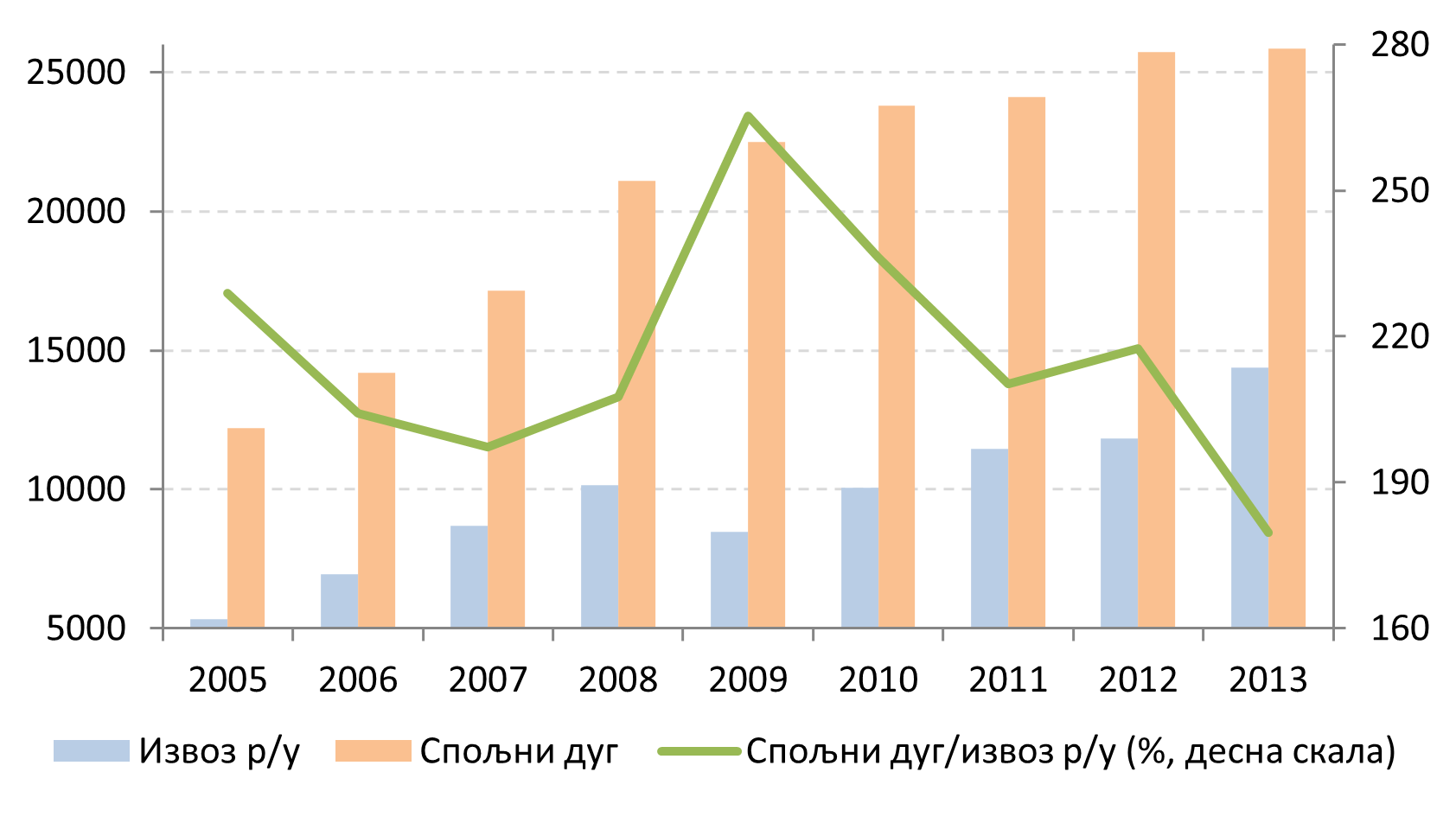
Važan indikator spoljnog duga jedne privrede. Ukazuje na poziciju solventnosti kroz odnos spoljnog duga i izvoza roba i usluga. Posmatrajući kritične vrednosti indikatora, srpska privreda se nalazi u grupi zemalja koje su umereno zadužene (165-275%), i to zahvlajujući bržem rastu izvoza roba i usluga (i finansijskih prihoda po tom osnovu) u odnosu na rast spoljnog duga tokom posmatranog perioda.
U kriznim godinama (2009. i 2012.) pogoršavala se pozicija solventnost – niska elastičnost inostrane tražnje smanjivala je prihod od izvoza, a rastući deficit budžeta povećavao je spoljni dug.
Istina, ovako visoka vrednost indikatora ne mora nužno da predstavlja visok stepen eksterne zaduženosti u zemljama koja se zadužuju radi investicionih ulaganja. U budućnosti takva ulaganja mogu donositi veće finansijske prilive, kao posledice povećanja izvoza roba i usluga. Otuda, visoke vrednosti indikatora danas mogle bi ići u pravcu smanjivanja vrednosti indikatora, tj. otklanjanja problema solventnosti u budućnosti.
The external debt solvency indicator is an important measure of an economy’s external indebtedness. It reflects the solvency position through the ratio of external debt to exports of goods and services. Considering the critical threshold values of this indicator, the Serbian economy belongs to the group of moderately indebted countries (165–275%), primarily due to the faster growth of exports of goods and services (and related foreign exchange revenues) compared to the growth of external debt during the observed period.
During the crisis years (2009 and 2012), the solvency position deteriorated: low elasticity of foreign demand reduced export revenues, while the growing budget deficit contributed to an increase in external debt.
However, such a high value of the indicator does not necessarily imply a high level of external indebtedness in countries that borrow primarily for investment purposes. In the future, such investments may generate higher financial inflows as a result of increased exports of goods and services. Consequently, high current values of the indicator may lead to its gradual decline over time, that is, to the alleviation of solvency problems in the future.