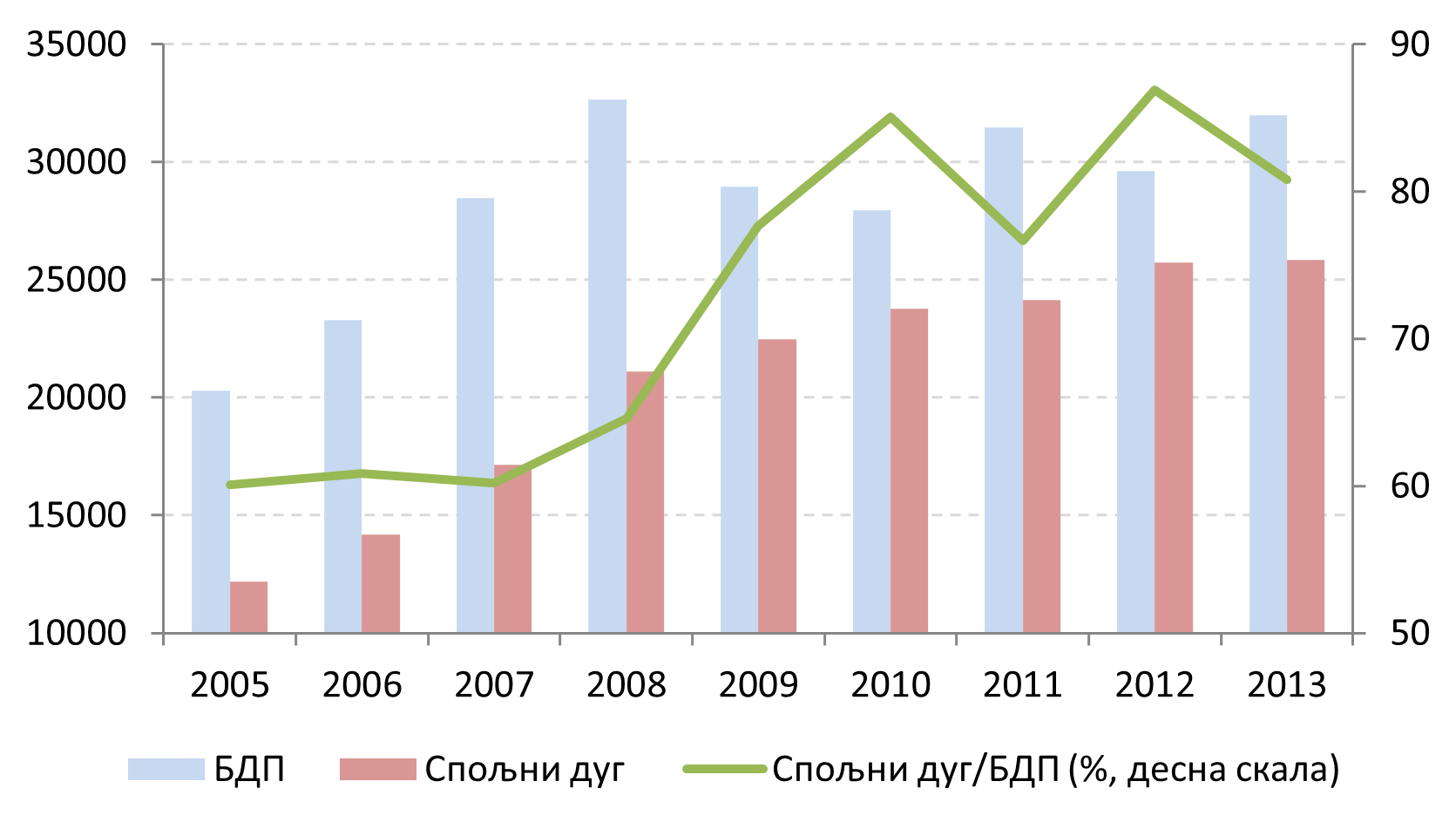
Indikator eksterne zaduženosti koji se najčešće koristi u ekonomskim analizama je indikator koji predstavlja odnos spoljnog duga i BDP-a.
Ovaj indikator ukazuje na sposobnost ekonomije da izvrši preusmeravanje domaće proizvodnje ka izvoznoj proizvodnji. Drugim rečima, proizvodnje proizvoda namenjenih domaćem tržištu ka proizvodnji proizvoda za inostrano tržište. U pozadini ovog indikatora uočavamo Balass-Samuelson-ov efekat (odnos realnog deeviznog kursa i BDP-a).
Posmatrajući kritične vrednosti indikatora, srpska privreda se nalazi u grupi visoko zaduženih zemalja (iznad 50%). To je situacija u kojoj imamo brži rast spoljnog duga od rasta finansijskih prihoda. Situacija je nepovoljnija posle 2008. godine. Sa negativnim efektima krize i rastom budžetskog deficita, spoljni dug se brže povećava nego BDP-a (čak i opada u godinama recesije (2009, i 2012.) čime se produbljuje problem solventnosti privrede.
The external indebtedness indicator most commonly used in economic analyses is the ratio of external debt to GDP.
This indicator reflects the ability of an economy to redirect domestic production toward export-oriented production – that is, to shift from producing goods for the domestic market to producing goods for foreign markets. In the background of this indicator, the Balassa–Samuelson effect can be observed, reflecting the relationship between the real exchange rate and GDP.
Considering the critical threshold values of the indicator, the Serbian economy belongs to the group of highly indebted countries (above 50%). This situation is characterized by faster growth of external debt compared to the growth of financial revenues. The situation became less favorable after 2008. Due to the negative effects of the global crisis and the increase in the budget deficit, external debt grew faster than GDP, which even declined during recession years (2009 and 2012), thereby deepening the economy’s solvency problem.