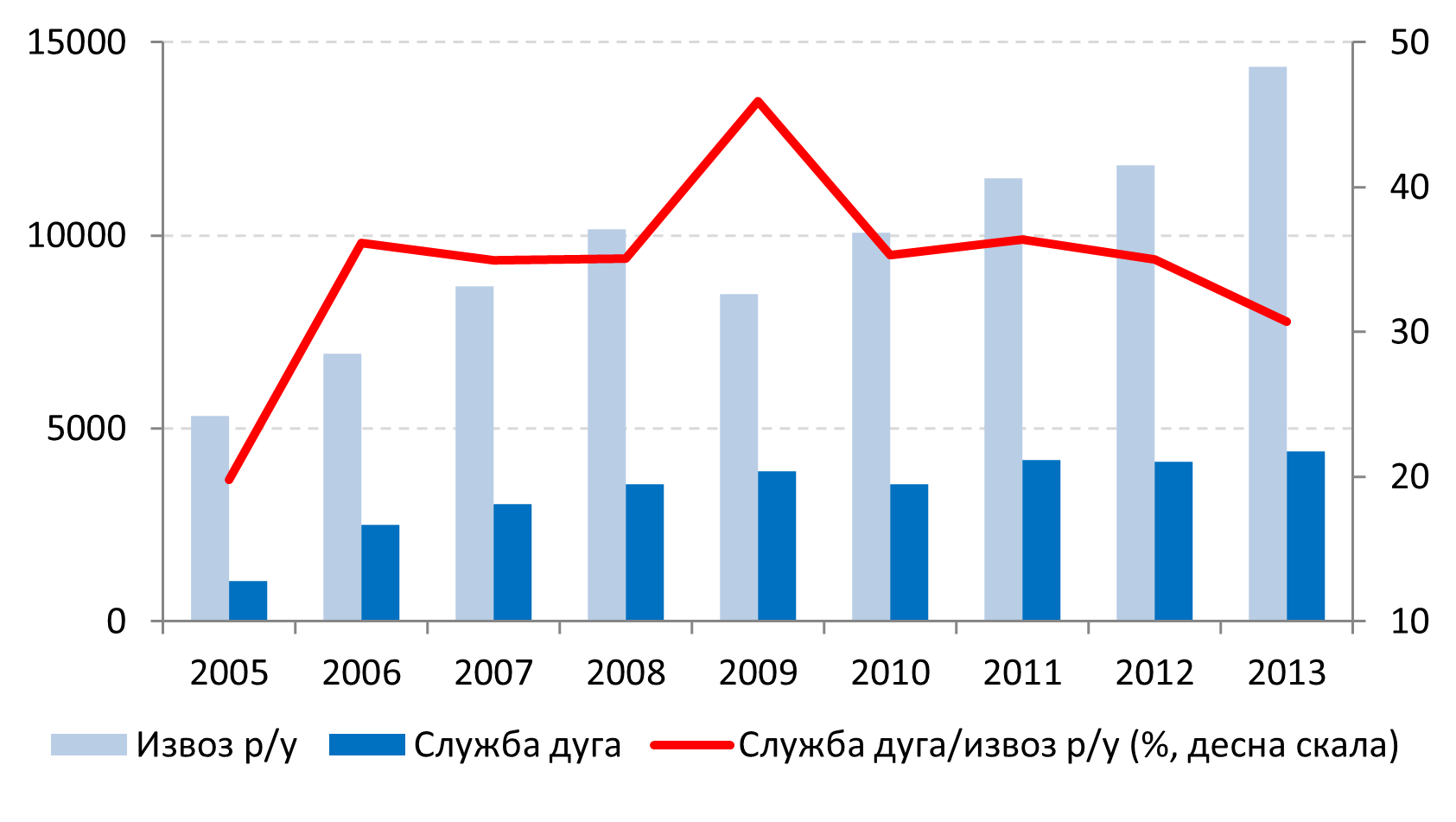
Još jedan indikator eksterne zaduženosti ili solventnosti ekonomije koji se često koristi jeste indikator službe duga u odnosu na izvoz roba i usluga. On pokazuje koliki deo obaveza po osnovu duga (glavnica + kamata) se pokriva iz ostvarenih prihoda po osnovu izvoza roba i usluga. Prema kritičnim vrednostima indikatora (30-50%) očigledno je da se srpska ekonomija nalazi u grupi zemalja koje su visoko zadužene.
Rastuća zaduženost i pristizanje obaveza po tom osnovu iz godine u godinu narušavaju solventnost ekonomije. Situacija je dodatno pogoršana sa padom izvoza tokom 2009. godine. Problem solventnosti postoji i zbog visokog udela kratkoročnog zaduživanja koje je bilo veoma zastupljeno u ukupnom dugu sve do 2008 godine. Istovremeno, nesolventnost ne doazi iz izvoznog sektora prvirede jer ne postoji uvozna zavisnost za sirovinama. Siromašan izvozni asortiman proizvoda ne utiče na elastičnost izvozne tražnje za domaćim proizvodima pa su slabi izgledi da se poveća izvoz i devizni priliv po tom osnovu.
Another frequently used indicator of external indebtedness or economic solvency is the debt service-to-exports of goods and services ratio. This indicator shows what proportion of total debt obligations (principal plus interest) is covered by revenues generated from exports of goods and services. According to the critical threshold values of the indicator (30–50%), it is evident that the Serbian economy belongs to the group of highly indebted countries.
Rising indebtedness and the increasing burden of debt obligations year after year undermine the solvency of the economy. The situation was further aggravated by the decline in exports during 2009. Solvency problems are also linked to the high share of short-term debt, which accounted for a significant portion of total external debt until 2008. At the same time, insolvency does not originate from the export sector of the economy, as there is no strong import dependence on raw materials. However, the narrow export product structure negatively affects the elasticity of export demand for domestic products, resulting in limited prospects for increasing exports and foreign exchange inflows on this basis.