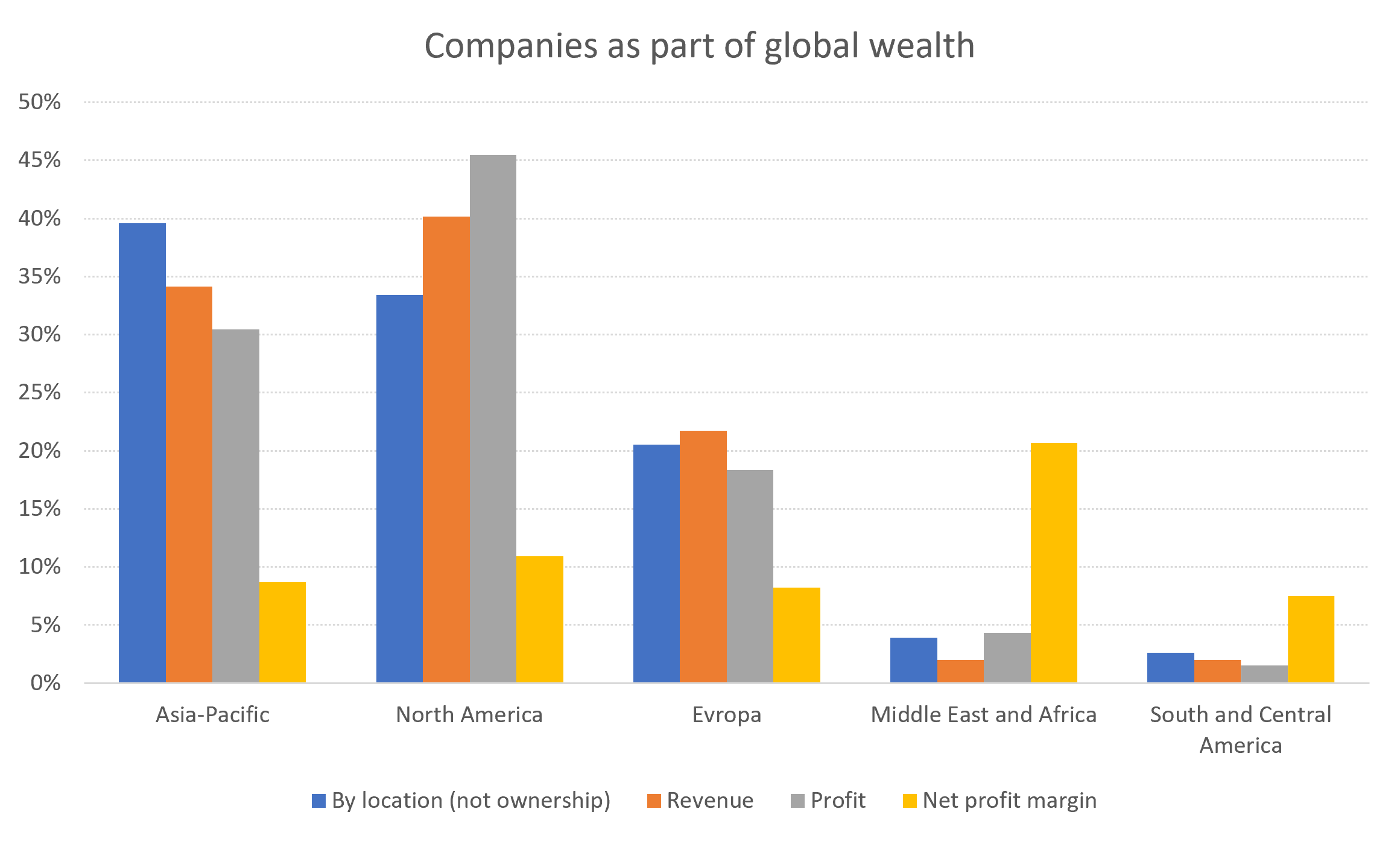
Globalna ekonomska moć sve više zavisi ne samo od toga koliko jedna zemlja proizvodi, već i od toga gde nastaju inovacije, gde se izgrađuju proizvodni kapaciteti i ko na kraju prisvaja stvorenu vrednost. Poređenje Sjedinjenih Američkih Država i Kine pokazuje dva različita puta ka ekonomskoj moći (Šon Stars): Sjedinjene Države su izuzetno uspešne u pretvaranju inovacija, intelektualne svojine, tehnologije i korporativne moći u globalnu vrednost i bogatstvo, dok je Kina sve uspešnija u pretvaranju investicija, ekonomije obima i tehnološkog napretka u proizvodne kapacitete i rast BDP-a.
BDP zato predstavlja samo deo priče. Sjedinjene Države ostaju najveća svetska ekonomija, sa nominalnim BDP-om od oko 30,8 biliona dolara u 2025. godini, u poređenju sa približno 19,5 biliona dolara u Kini. Ipak, razlika u dinamici rasta je značajna: kineska ekonomija porasla je za oko 5,0%, u poređenju sa približno 2,2% u Sjedinjenim Državama. Kina zato smanjuje deo ekonomskog jaza ne zahvaljujući jednom velikom proboju, već akumulacijom proizvodnih kapaciteta.
Američki model je posebno uspešan u prisvajanju ekonomske vrednosti. Američke kompanije dominiraju mnogim od najprofitabilnijih svetskih tehnološki intenzivnih sektora – softverom, veštačkom inteligencijom, poluprovodnicima, farmaceutskom industrijom, finansijama i digitalnim platformama. Vrednost korporacija dodatno ilustruje ovu prednost. Američka tržišta akcija vrednuju se višestruko više od zbirne tržišne kapitalizacije najvećih kineskih berzi, što odražava ne samo trenutnu proizvodnju već i očekivanja u pogledu budućih zarada, intelektualne svojine i tehnoloških renti.
Ovo je u skladu sa Šumpeterovom teorijom rasta, prema kojoj inovacije stvaraju privremene monopolističke rente koje nagrađuju kompanije sposobne da uvedu nove tehnologije i proizvode. Endogena teorija rasta dodaje još jednu dimenziju: znanje, istraživanje i razvoj, ljudski kapital i tehnološke sposobnosti mogu stvarati trajne prednosti u produktivnosti, jer je znanje kumulativno i može se višestruko primenjivati.
Kina predstavlja drugačiji, iako sve više konvergentan, mehanizam. Njena izuzetno visoka stopa investicija, obim proizvodnje i integracija u globalne lance vrednosti stvorili su ogromnu proizvodnu bazu. Kina je odavno prevazišla ulogu centra za proizvodnju sa niskim troškovima i brzo širi svoje kapacitete u proizvodnji električnih vozila, baterija, obnovljive energije, elektronike, robotike, veštačke inteligencije i napredne proizvodnje. Njeni rastući inovacioni kapaciteti sve više joj omogućavaju ne samo da proizvodi tehnologije razvijene drugde, već i da razvija i komercijalizuje sopstvene tehnologije.
Ova razlika je važna zato što je BDP tok, dok je ekonomsko bogatstvo stanje, odnosno zaliha imovine. BDP meri proizvodnju tokom određenog perioda, dok bogatstvo zavisi od akumuliranog fonda proizvodnih sredstava, ljudskog kapitala, tehnologije, intelektualne svojine, infrastrukture i finansijske imovine koja može generisati budući prihod. Jedna zemlja zato može brzo povećavati svoj BDP, dok druga prisvaja nesrazmerno veliki deo vrednosti nastale u globalnoj proizvodnji.
Nova ekonomska konkurencija zato je složenija od trke za najvećim BDP-om. Kina izgrađuje ogromne proizvodne kapacitete, dok Sjedinjene Države ostaju izuzetno efikasne u pretvaranju znanja i inovacija u globalno skalabilne kompanije, intelektualnu svojinu i finansijsku vrednost. Ova dva modela sve više konvergiraju, ali njihove komparativne prednosti i dalje ostaju različite.
Strateško pitanje za druge ekonomije – uključujući manje evropske zemlje – zato nije samo „Ko će pobediti?“ Ono je mnogo fundamentalnije: da li želimo da trošimo budućnost, proizvodimo budućnost ili posedujemo deo budućnosti?
Ovo je takođe koristan princip za savremenu ekonomsku politiku. Cilj ne bi trebalo da bude samo predviđanje kako će izgledati ekonomija sutrašnjice. Ekonomska politika treba da izgradi kapacitete koji omogućavaju zemlji da stvara budućnost koju želi – i da prisvoji značajan deo vrednosti koju sama stvara.
Izvor: Forbes Global 2000
Global economic power is increasingly determined not just by how much a country produces, but also by where innovation is created, where production capacity is built, and who ultimately captures the value. A comparison between the United States and China illustrates two different paths to economic power (Sean Starrs): the United States has been remarkably successful in converting innovation, intellectual property, technology, and corporate power into global value and wealth, while China has been increasingly successful in converting investment, scale, and technological advancements into production capacity and GDP growth.
GDP alone therefore tells only part of the story. The United States remains the world’s largest economy, with a nominal GDP of about $30.8 trillion in 2025, compared with roughly $19.5 trillion for China. Yet the difference in growth dynamics is striking: China’s economy expanded by about 5.0%, compared with about 2.2% in the United States. China is therefore closing some of the economic gap not through a single breakthrough, but through the accumulation of production capacity.
The American model is particularly powerful in capturing economic value. American companies dominate many of the world’s most profitable technology-intensive sectors – software, artificial intelligence, semiconductors, pharmaceuticals, finance, and digital platforms. The scale of corporate valuation illustrates this advantage. American stock markets are valued at several times the combined capitalization of China’s major stock exchanges, reflecting not only current production but also expectations about future earnings, intellectual property, and technological rents.
This is consistent with Schumpeter’s theory of growth, in which innovation creates temporary monopoly rents that reward firms that are able to introduce new technologies and products. The endogenous theory of growth adds another dimension: knowledge, research and development, human capital, and technological capabilities can generate lasting productivity advantages because knowledge is cumulative and can be applied repeatedly.
China presents a different, albeit increasingly convergent, mechanism. Its exceptional investment rate, production scale, and integration into global value chains have created a vast manufacturing base. China has far surpassed its role as a low-cost manufacturing hub and is rapidly expanding its capabilities in electric vehicles, batteries, renewable energy, electronics, robotics, artificial intelligence, and advanced manufacturing. Its growing innovation capacity increasingly allows it not only to produce technologies developed elsewhere, but also to develop and commercialize its own.
This distinction is important because GDP is a flow, while economic wealth is a stock. GDP measures production over a period of time; wealth depends on the accumulated stock of productive assets, human capital, technology, intellectual property, infrastructure, and financial assets capable of generating future income. One country can therefore rapidly increase its GDP, while another captures a disproportionate share of the value generated by global production.
The new economic competition is consequently more complex than the race for the largest GDP. China is building enormous manufacturing capacity; the US remains remarkably efficient at transforming knowledge and innovation into globally scalable companies, intellectual property, and financial value. The two models are increasingly converging, but their comparative advantages remain distinct.
The strategic question for other economies – including smaller European countries – is therefore not simply “Who will win?” It is more fundamental, do we want to consume the future, produce the future, or own a share of the future?
This is also a useful principle for modern economic policy. The goal should not be simply to predict what tomorrow’s economy will look like. Policy should build the capacities that enable a country to create the future it wants – and to capture a significant share of the value it creates.
Source: Forbes Global 2000