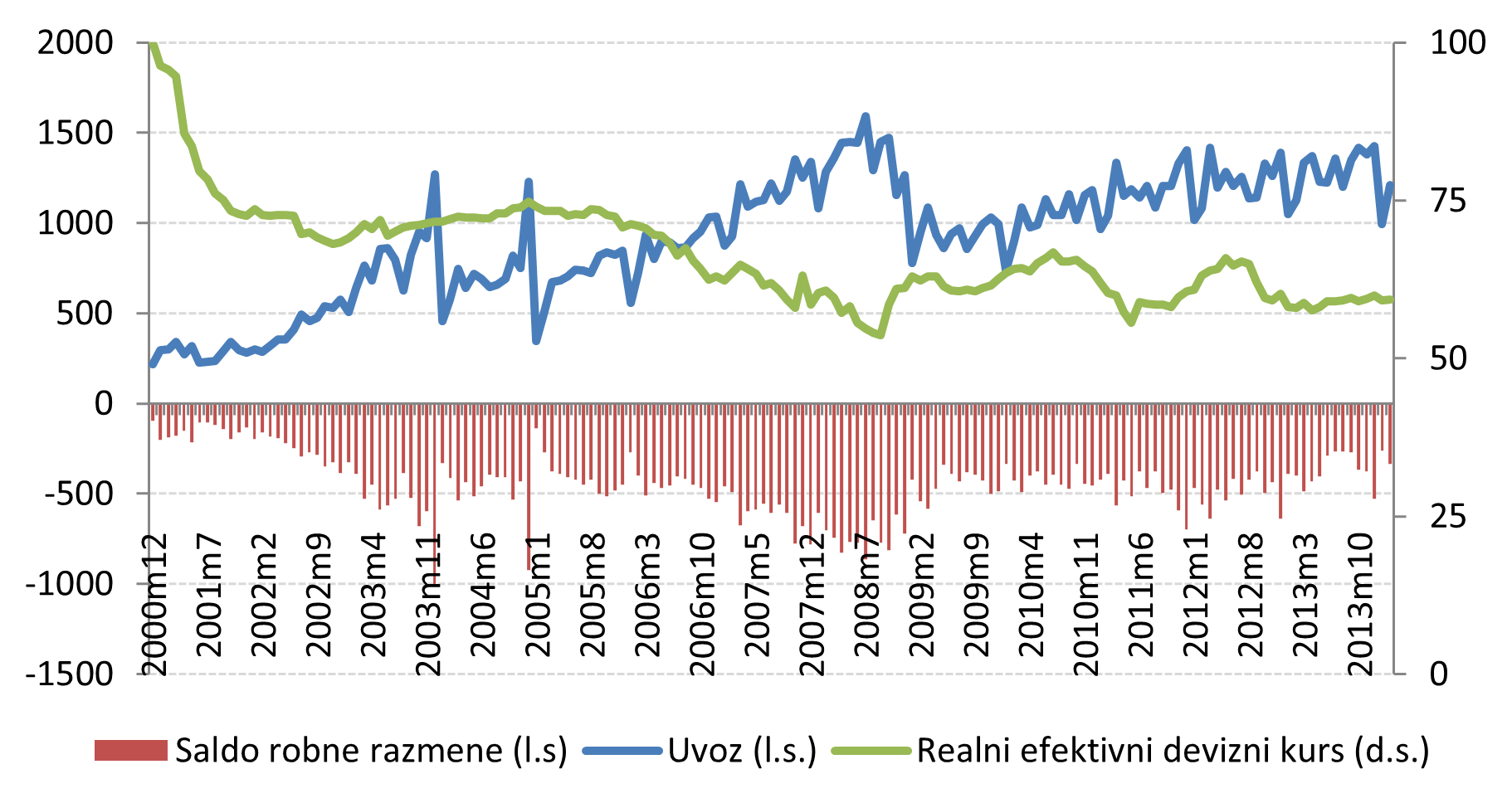
Početak tranzicionog perioda srpske ekonomije praćen je visokim nivoom precenjenosti nacionalne valute. Realan efektivni devizni kurs ima trend opadanja (aprecijacije) i pokazuje gubitak konkurentnosti.
U februaru 2014. godine taj nivo apresiranosti nacionalne valute, prema baznom decembru 2000, iznosio je gotovo 40% (vrednost indeksa je bila 59,36).
Po pravilu, apresiranost nacionalne valute vezuje se za spoljnotrgovinski deficit. Najviša precenjenost dinara beležna je polovinom 2008. godine kada je ostvaren naviši deficit u razmeni sa inostranstvom (865 mil. evra), pre svega zbog visokog uvoza (1590 mil. evra).
Izvor: NBS
The beginning of the transition period of the Serbian economy was accompanied by a high level of overvaluation of the national currency. The real effective exchange rate shows a downward trend (appreciation), indicating a loss of competitiveness.
In February 2014, the level of appreciation of the national currency, relative to the base period of December 2000, amounted to almost 40% (the index value was 59.36).
As a rule, the appreciation of the national currency is associated with a foreign trade deficit. The highest overvaluation of the dinar was recorded in mid-2008, when the largest trade deficit with the rest of the world was achieved (EUR 865 million), primarily due to high imports (EUR 1,590 million).
Source: National Bank of Serbia