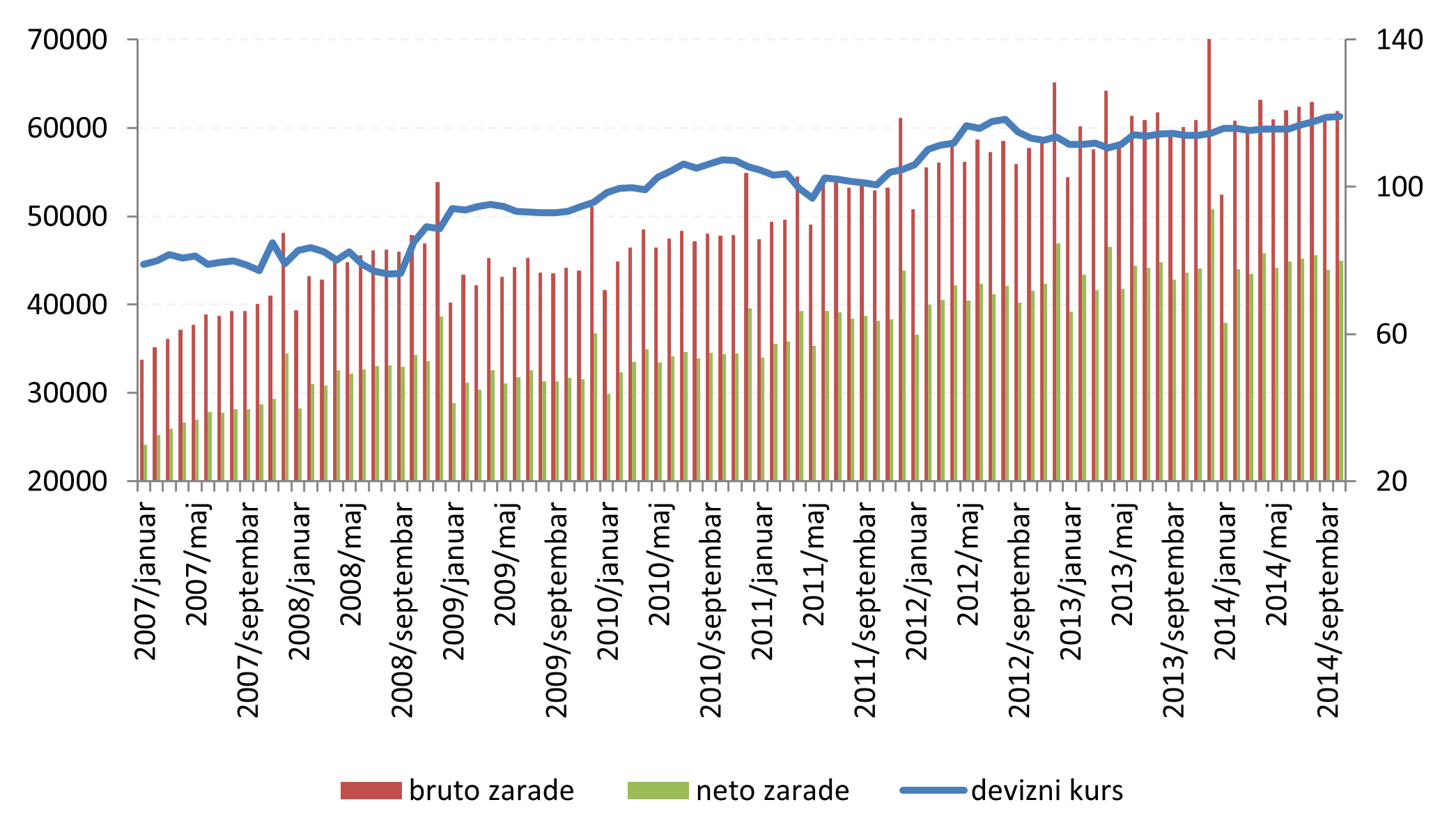
Od 2000. godine kontinurano obezvređivanje dinara (nominalna depresijacija deviznog kursa od 48,82%) bilo je praćeno rastom realnih zarada.
Ekonometrijska analiza je pokazala da je u posmatranom periodu rast realnog deviznog kursa bio praćen rastom realnih neto zarada u srpskoj ekonomiji. Prema ocenjenom modelu pri rastu realnog deviznog kursa od 1%, pri datim potrošačkim cenama, beležen je rast realnih zarada za 2,9% (statistički značajan ocenjeni parametar je 2,909, pri koeficijentu determinacije od 0,85%). Nominalna depresijacija dinara u posmatranom periodu iznosila je 48%, ali je rast deviznog kursa bio praćen daleko većim rastom nominalniih, pa i realnih neto zarada. Zarade u evrima su rasle, posebno do 2008. godine, nakon čega sledi blagi pad i stagnacija.
Podaci na mesečnom nivou pokazali su značajna odstupanja (outliers) tokom decembra meseca što je posledica postojanja mekog budžetskog ograničenja. Po pravilu, kraj godine bio je rezervisan za isplate trinaeste plate i bonusa u javnom sektoru što je značajno odstupalo od proseka, a i uticalo da ocena bude neznačajna.
Napomena: prosečna neto i bruto zarda izražena je u dinarima, devizni kurs predstavljen je kroz direktno notiranje.
Izvor: Kalkulacije autora na bazi podataka NBS i RZS
Since 2000, the continuous weakening of the dinar (a 48.82% nominal depreciation of the exchange rate) has been accompanied by an increase in real wages.
The econometric analysis shows that in the observed period the growth of the real exchange rate was accompanied by an increase in real net wages in the Serbian economy. According to the estimated model, a 1% increase in the real exchange rate, with consumer prices held constant, led to a 2.9% increase in real wages (the statistically significant estimated parameter is 2.909, with a coefficient of determination of 0.85). Although the nominal depreciation of the dinar amounted to 48%, the rise in the exchange rate was followed by a much stronger increase in nominal and real net wages. Wages expressed in euros increased, particularly until 2008, after which a slight decline and stagnation occurred.
Monthly data revealed significant deviations (outliers) in December, caused by the presence of a soft budget constraint. As a rule, the end of the year was marked by the payment of thirteenth salaries and bonuses in the public sector, which significantly deviated from the average and affected the statistical significance of the estimates.
Note: Average net and gross wages are expressed in dinars, while the exchange rate is presented using direct quotation.
Source: Author’s calculations based on data from the National Bank of Serbia and the Statistical Office of the Republic of Serbia.