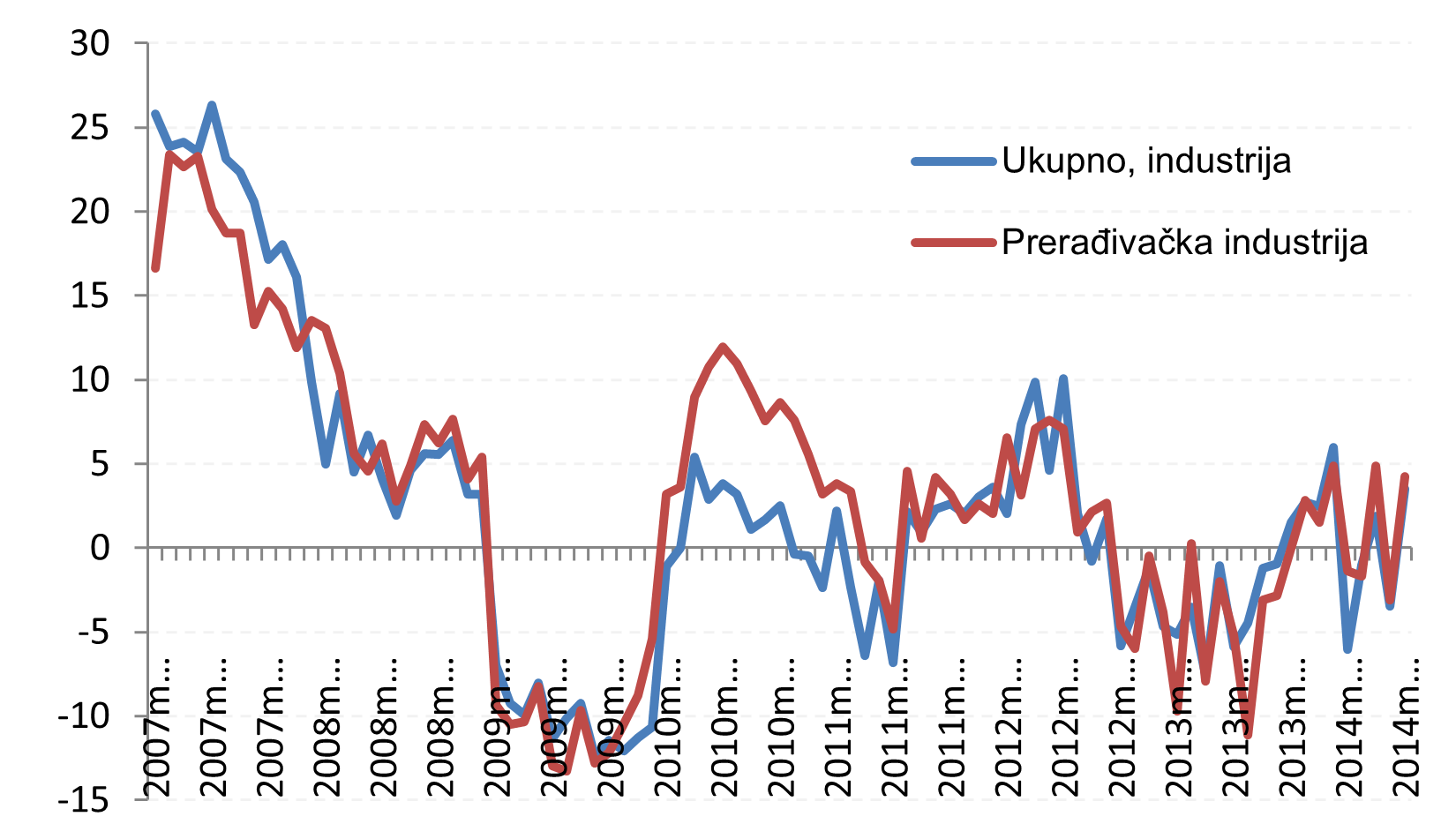
U prvim godinama tranzicije srpske ekonomije životni standard radnika dinamično je rastao. Euforična situacija i prividan rast životnog standarda morali su se jednog trenutka vratiti kao bumerang. Kao po lošem običaju, problemi (neraealnih zarada) nisu došli sami već su doživeli erupciju sa nadolazećom krizom. U periodu 2001-2008. godina realne neto zarade su rasle po prosečnoj godišnjoj stopi od 13,7% (ili sa 100 na 400 evra). Taj rast je beležen ne samo u dinarima već i u evrima, što se sa liberalizacijom trgovinskih tokova, i u režimu fiksnog deviznog kursa (precenjene nacionalne valute), negativno odrazilo na rastući deficit u robnoj razmeni. (Ko još ne bi iskoristio šansu uvoza automobila, kupovine bele tehnike, turističkih putovanja u inostranstvo…?)
Tako visok rast realnih zarada nije imao dovoljno snažnu podršku – niže stope rasta privrede i niža produktivnost rada nisu mogli dugo da izdrže ovakav pritisak na ekonomiju. Dok su kreatori ekonomske politike ekonomske mere sprovodili za interese političara (i u korist javnog sektora) jedinični troškovi rada u industriji su rasli i činili industriju nekonkurentnom u regionu. Otuda ne iznenenađuje niži nivo stranih direktnih investicija, od očekivanog!
Ovakav pristup, zajedno sa negativnim efektima svetske krize, imao je za rezultat usporavanje ekonomske aktivnosti, posebno u realnom sektoru. Odsustvo likvidnosti privrede, bez adekvatnih podsticaja, ugušio je realan sektor privrede koji nije bio u mogućnosti da podigne privrednu aktivnost na predkrizni nivo. U narednim godinama, istina je da su realne neto zarade u industriji (prerađivačkoj) blago rasle 2010. godine za 0,28% (0,61%), 2011. godine za 0,32% (0,61%), 2012. godine za 0,82% (1,09%) i 2013. godine za 0,62% (1,28%), ali su one opadale u evrima, tokom perioda 2009-2013. godina, sa 338, 309, 313, 285 i 286, respektivno (zarade u prerađivačkoj industriji u posmatranim godinama su iznosile 271, 249, 253, 230 i 233 evra). Na pad prosečnih zarada u industriji uticao je i veliki pad zaposlenosti.
Napomena: tokom 2010. godine promenjena je metodologija po kojoj se sada uključuju zarade zaposlenih kod privatnih preduzetnika
In the early years of the transition of the Serbian economy, workers’ living standards increased dynamically. The euphoric atmosphere and the apparent rise in living standards eventually had to return like a boomerang. As is often the case, the problems of unrealistic wages did not emerge in isolation but erupted together with the approaching crisis. In the period 2001-2008, real net wages grew at an average annual rate of 13.7% (or from EUR 100 to EUR 400). This growth was recorded not only in dinars but also in euros, which – under trade liberalization and a fixed exchange rate regime (with an overvalued national currency) – had a negative impact on the growing trade deficit. (Who would not take advantage of the opportunity to import cars, purchase household appliances, or travel abroad?)
Such a high growth of real wages was not supported by sufficiently strong fundamentals – lower economic growth rates and low labor productivity could not sustain this pressure on the economy for long. While economic policymakers implemented measures in the interest of politicians (and in favor of the public sector), unit labor costs in industry increased, rendering the industrial sector uncompetitive within the region. Consequently, the lower-than-expected level of foreign direct investment is not surprising.
This approach, combined with the negative effects of the global economic crisis, resulted in a slowdown of economic activity, particularly in the real sector. The lack of liquidity in the economy, without adequate incentives, suffocated the real sector, which was unable to restore economic activity to its pre-crisis level. In subsequent years, it is true that real net wages in industry (manufacturing) increased slightly – by 0.28% (0.61%) in 2010, 0.32% (0.61%) in 2011, 0.82% (1.09%) in 2012, and 0.62% (1.28%) in 2013 – but they declined when expressed in euros over the period 2009–2013, from EUR 338, 309, 313, 285, and 286, respectively (manufacturing wages in the observed years amounted to EUR 271, 249, 253, 230, and 233). The decline in average industrial wages was also influenced by a significant drop in employment.
Note: In 2010, the methodology was changed to include wages of employees working for private entrepreneurs.