Često puta se tranzicioni proces kvalifikuje kao proces transformacije kojim se podiže nivo efikasnosti privrede i tako stiču visoke koristi od porasta produktivnosti, jer se očekuje da će novi efikasniji privatni sektor zameniti neefikasni državni sektor. Međutim, porast produktivnosti u srpskoj privredi iskazao je onaj drugi, nepovoljniji, efekat – visoku stopu nezaposlenosti. Nerazvijeno tržište radne snage, ali i sprovedene privredne reforme sa sobom su donele i problem niske zaposlenosti.
Zdrava ekonomija beleži rast produktivnost rada tako što ostvaruje brži rast industrijske proizvodnje nego što je rast broja zaposlenih radnika. U srpskoj industriji slika je suprotna. Rastuća produktivnost u ukupnoj industriji i visoka produktivnost rada u prerađivačkoj industriji posledica su dramatičnog pada broja zaposlenih.
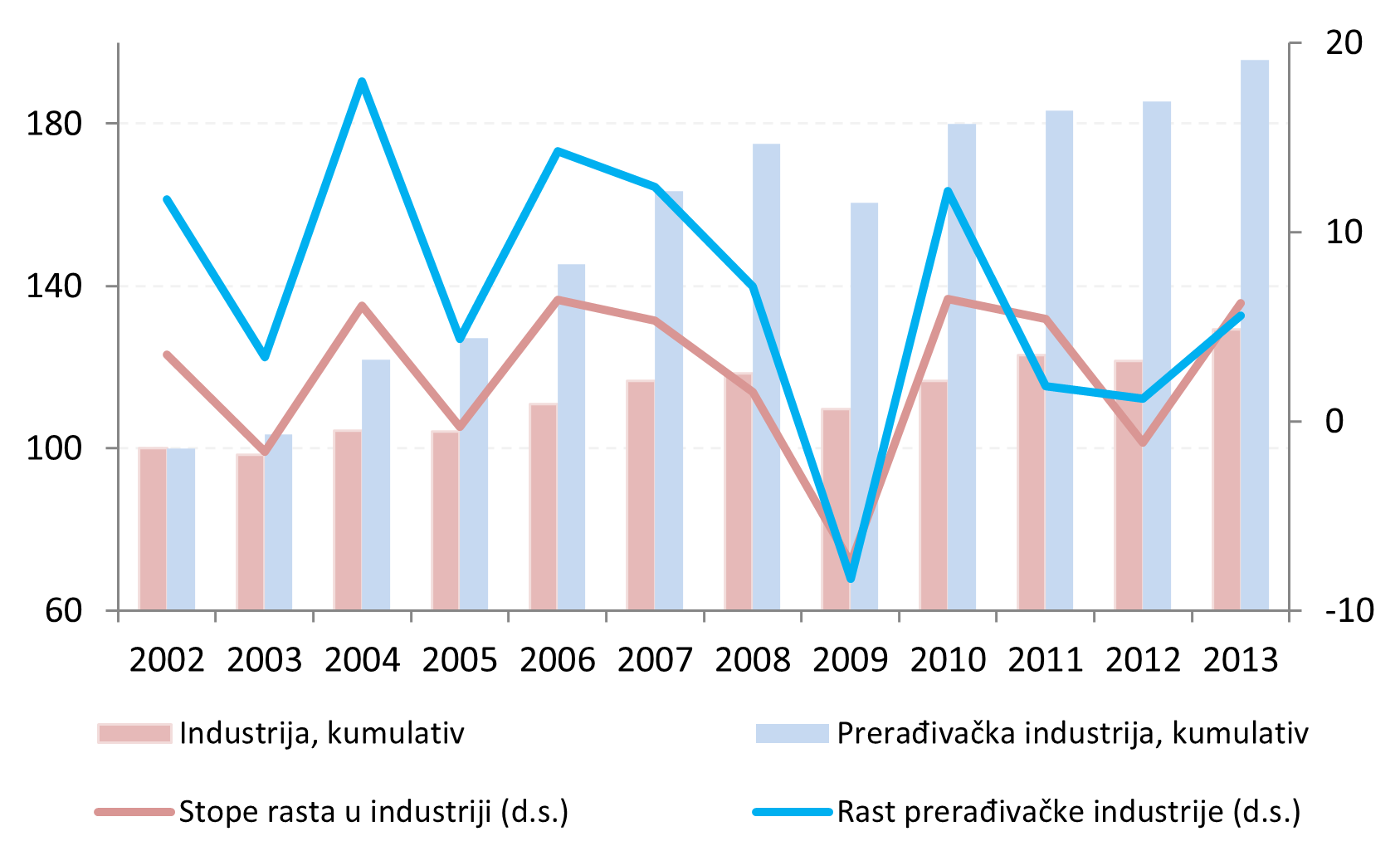
Ukupna produktivnost rada u Srbiji povećana je u periodu 2002-2013. godina, i to produktivnost rada u ukupnoj industriji beleži prosečan godišnji rast od 2,5%, dok u prerađivačkoj industriji 6,7%. Stope rasta produktivnosti u posmatranom periodu nisu bile ubedljive. Naprotiv, nestabilan rast industrijske proizvodnje i ekstrnalije uticali su na relativno loš rezultat. Visok kumulativan rast produktivnosti prerađivačke industrije (iznad produktivnosti ukupne industrije) u posmatranom periodu posledica je velikog smanjenja zaposlenosti u prerađivačkoj industriji za gotovo 50%.
Ono što svakako zabrinjava jeste kumulativno nizak rast industrijske proizvodnje od 7,2% i blagi rast prerađivačke industrije od 1,2% u posmatranom periodu. Ovako niske stope rasta ne mogu, ni u kratkom roku, povećati produktivnost rada niti obezbediti novo zapošljavanje. Dodatan problem predstavlja činjenica da je predkrizni nivo industrijske proizvodnje još uvek daleko.
The transition process is often characterized as a transformation aimed at increasing economic efficiency and generating substantial gains from productivity growth, based on the expectation that a new, more efficient private sector would replace the inefficient state sector. However, productivity growth in the Serbian economy has manifested its less favourable effect – high unemployment. An underdeveloped labour market, together with the implemented economic reforms, has also resulted in the problem of low employment.
A healthy economy records growth in labour productivity through faster growth of industrial output than of employment. In Serbian industry, the situation is the opposite. Rising productivity in total industry and high labour productivity in manufacturing are the result of a dramatic decline in employment.
Overall labour productivity in Serbia increased during the period 2002-2013. Labour productivity in total industry recorded an average annual growth rate of 2.5%, while in manufacturing it grew by 6.7%. Productivity growth rates during the observed period were not convincing; on the contrary, unstable industrial output growth and external shocks negatively affected the overall performance. The high cumulative productivity growth in manufacturing (exceeding that of total industry) during the period is primarily the result of a nearly 50% reduction in employment in manufacturing.
What is particularly concerning is the cumulatively low growth of industrial production of 7.2% and the modest growth of manufacturing output of 1.2% during the observed period. Such low growth rates cannot, even in the short run, increase labour productivity or generate new employment. An additional problem is the fact that pre-crisis levels of industrial production have yet to be reached.