Konačno, nakon punih 10 godina srpska industrija je ostvarila „zdravu“ produktivnost rada. Zdravu, jer je u 2015. godini rast zaposlenosti pratio rast industrijske proizvodnje.
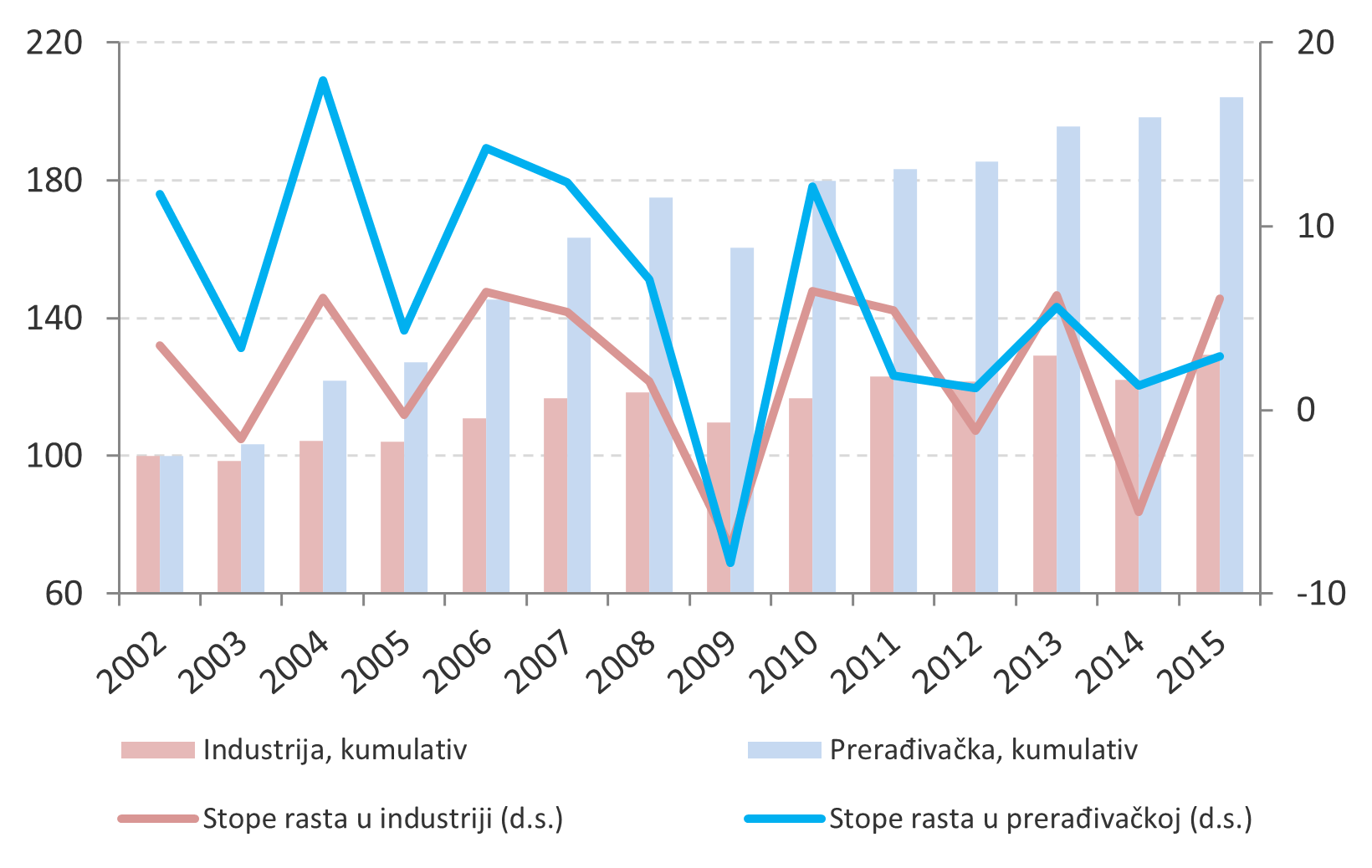
U periodu od 2002. do 2015. godine srpska industrija je uglavnom beležila pozitivnu produktivnost rada, i u ukupnoj industriji i u prerađivačkoj industriji. Taj nivo postignute kumulativne produktivnosti rada (indeks industrije 129,5, indeks prerađivačke industrije 204,2) trebao je dati više stope rasta ekonomije od ostvarenih. Međutim, one su izostale jer je produktivnost rada bila rezultat smanjivanja zaposlenosti u industriji.
Tokom posmatranog perioda prosečna godišnja stopa rasta produktivnosti u celokupnoj industriji iznosila je 2,1%, a prerađivačkoj 6,1%, tako da nije bilo osnova za ostvarivanje viših stopa privrednog rasta (prosečna godišnja stopa rasta industrije tokom petnaestogodišnjeg tranzicionog perioda je 1,3%).
U 2015. godini, po prvi put nakon 10 godina, u srpskoj industriji zabeležena je zdrava produktivnost rada koja je rezultovala rastom zaposlenosti u industriji, a koja je pratila rast industrijske proizvodnje. U prerađivačkoj industriji slika je nepovoljnija, jer je tokom celog tranzicionog perioda, uz nestabilan rast industrijske proizvodnje, zaposlenost dramatično smanjivana.
Za više stope rasta privrede u narednim godinama nužna je rastuća industrijska proizvodnja, sa novim proizvodnim sektorima, koji će zapošljavati nove radnike. Samo rastuća produktivnost rada može biti pokretač ekonomije, posebno u kriznim uslovima (što je isticano na ekonomskom skupu u Davosu, januara 2016. godine).
Izvor: podaci RZS, proračuni autora
Finally, after a full decade, Serbian industry achieved “healthy” labor productivity. It is considered healthy because, in 2015, employment growth was accompanied by growth in industrial production.
In the period from 2002 to 2015, Serbian industry generally recorded positive labor productivity, both in total industry and in manufacturing. The achieved level of cumulative labor productivity (industry index 129.5, manufacturing index 204.2) should have resulted in higher economic growth rates than those actually realized. However, this did not occur because labor productivity growth was largely the result of employment reductions in industry.
During the observed period, the average annual growth rate of labor productivity in total industry amounted to 2.1%, while in manufacturing it reached 6.1%. Consequently, there was no basis for achieving higher economic growth rates, as the average annual growth rate of industrial output during the fifteen-year transition period was only 1.3%.
In 2015, for the first time in ten years, Serbian industry recorded healthy labor productivity that resulted in employment growth, in line with rising industrial production. The situation in manufacturing is less favorable, as throughout the entire transition period – alongside unstable industrial production growth – employment was drastically reduced.
For higher economic growth rates in the coming years, expanding industrial production with new manufacturing sectors that generate new jobs is essential. Only rising labor productivity can act as a driver of economic growth, especially under crisis conditions, as emphasized at the World Economic Forum in Davos in January 2016.
Source: Statistical Office of the Republic of Serbia (SORS), author’s calculations